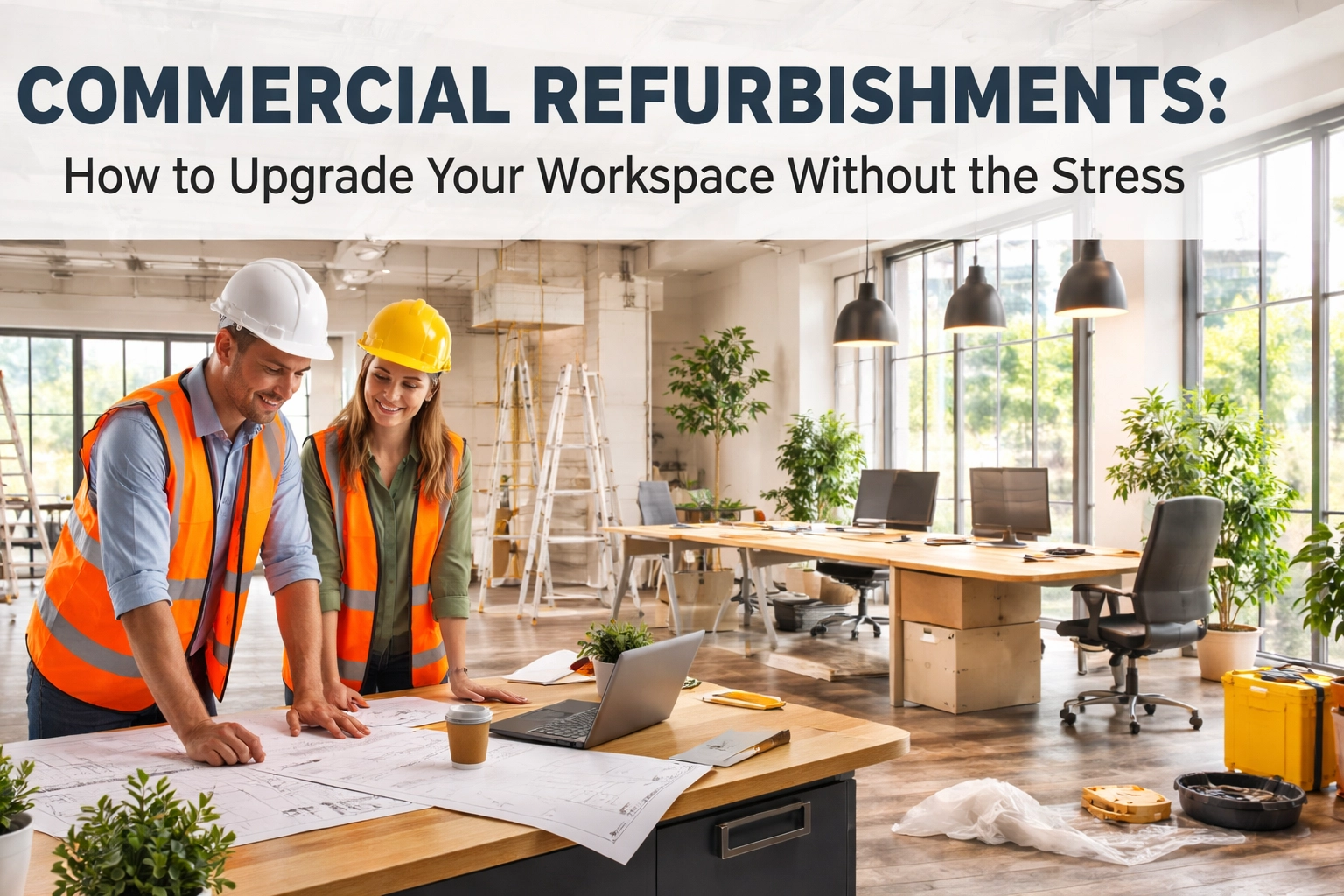
Your workspace says a lot about your business. It shapes how your team works, how clients perceive you, and ultimately, how successful your operations can be. But when the time comes to upgrade, the thought of a commercial refurbishment can feel overwhelming.
The good news? It doesn't have to be stressful. With the right approach and the right construction partner, you can transform your commercial space while keeping disruption to an absolute minimum.
In this guide, we'll walk you through how to upgrade your workspace the smart way: and why working with experienced specialists like Harley & Clarke can make all the difference.
Why Consider a Commercial Refurbishment?
Before diving into the process, it's worth asking yourself why you're considering a refurbishment in the first place. Understanding your goals will shape every decision that follows.
Common reasons businesses across the Northwest and North Wales invest in commercial refurbishments include:
- Modernising brand image – Your premises should reflect your company's values and professionalism.
- Improving space utilisation – Making the most of every square foot to boost productivity.
- Supporting new working methods – Adapting to hybrid working, collaborative spaces, or enhanced meeting facilities.
- Boosting employee morale – A well-designed workspace directly impacts staff wellbeing and retention.
- Meeting compliance requirements – Updating facilities to meet current health, safety, and accessibility standards.
Whatever your motivation, defining your vision early prevents costly changes mid-project and keeps everything running smoothly.
Step 1: Define Your Goals and Budget
The most stress-free refurbishments start with clear planning. Before any construction begins, take time to establish exactly what you want to achieve.
Ask yourself these questions:
- What problems are you trying to solve with this refurbishment?
- How do you want your space to function differently?
- What impression should your workspace give to clients and visitors?
- What is your realistic budget, including contingency?
A detailed brief helps your construction partner understand your vision from day one. It also means fewer surprises down the line: which is exactly what you want when managing a busy commercial operation.

Step 2: Choose the Right Construction Partner
This is arguably the most important decision you'll make. The right refurbishment company doesn't just build: they guide you through the entire process with expertise and professionalism.
When evaluating potential partners, look for:
- Proven experience in commercial projects similar to yours
- A bespoke approach that tailors solutions to your specific needs
- Competitive costings with transparent pricing
- Strong communication throughout every stage
- An excellent track record of delivering on time and to specification
Harley & Clarke, for example, specialise in commercial, residential, heritage, and retail projects across the Northwest and North Wales. With years of experience recovering and completing all types of building projects: from new-build developments to complex refurbishments and conversions: they bring the expertise needed to deliver exceptional results without the headaches.
Step 3: Conduct a Thorough Site Assessment
Once you've engaged your construction partner, the next step is a comprehensive assessment of your existing space. This isn't just about measuring rooms: it's about understanding what you're working with.
A professional assessment should cover:
- Structural integrity of the building
- Electrical and plumbing systems
- Current layout and flow
- Potential limitations or challenges
- Opportunities for improvement
This analysis forms the foundation of your renovation strategy. It helps identify what can be achieved within your budget and highlights any issues that need addressing before work begins.

Step 4: Plan for Minimal Disruption
One of the biggest concerns for any business undertaking a refurbishment is disruption. How do you keep operations running while construction is underway?
Thoughtful planning and phasing are critical here. An experienced contractor will develop a timeline that minimises impact on your daily business through strategies such as:
- Night or weekend work schedules – Completing noisy or disruptive tasks outside business hours.
- Phased renovations – Working floor-by-floor or section-by-section rather than tackling everything at once.
- Temporary workspaces – Creating functional areas for your team during construction phases.
- Clear communication – Keeping you informed of progress and any schedule adjustments.
The goal is to maintain business continuity while still achieving the transformation you need. With the right planning, your team and clients will barely notice the work happening around them.
Step 5: Handle Permits and Compliance
Commercial refurbishments often require permits and approvals from local authorities. Building codes, zoning laws, health and safety regulations: navigating this landscape can be complex and time-consuming.
This is where working with a professional construction company pays dividends. Experienced contractors like Harley & Clarke handle this process on your behalf, ensuring all necessary permissions are in place before work begins. This proactive approach prevents delays and keeps your project on track.
Step 6: Design with Purpose
Good design isn't just about aesthetics: it's about creating spaces that work for your business. Your refurbishment should enhance functionality while reflecting your brand identity.
Consider these design elements:
- Natural light – Maximising daylight improves mood and productivity.
- Flexible spaces – Areas that can adapt to different uses as your business evolves.
- Quality materials – Durable finishes that look professional and stand the test of time.
- Technology integration – Built-in solutions for connectivity, AV equipment, and modern working.
- Accessibility – Ensuring your space is welcoming and usable for everyone.
Working with a construction partner who offers bespoke services means your refurbishment is tailored specifically to your needs: not a one-size-fits-all solution.

Step 7: Establish Clear Communication
Regular communication between all stakeholders is essential for a stress-free refurbishment. This includes your internal teams (facilities management, IT, finance) and your construction partner.
Effective communication looks like:
- Regular progress meetings at agreed intervals
- Detailed planning documents including 2D and 3D drawings
- A single point of contact for queries and decisions
- Transparent reporting on timelines and budgets
- A clear process for managing any changes
When everyone is aligned and informed, projects stay on track. Issues are caught early and resolved quickly, rather than snowballing into costly problems.
Step 8: Follow a Structured Process
The best refurbishment companies follow a proven, structured approach. This typically includes:
- Scoping – Understanding your requirements and objectives
- Analysis – Assessing your current space and identifying opportunities
- Design – Developing tailored solutions and detailed plans
- Planning – Creating a phased timeline that minimises disruption
- Implementation – Executing the work to the highest standards
- Follow-up – Ensuring everything meets your expectations post-completion
Following established processes from initial consultation through to final handover prevents overlooked elements and ensures comprehensive delivery. You know exactly what to expect at every stage.

The Harley & Clarke Difference
When it comes to commercial refurbishments in the Northwest and North Wales, Harley & Clarke have built a reputation for exceptional service and workmanship. Their approach combines proven expertise with a genuinely bespoke service: every project is treated as unique, with solutions tailored to your specific requirements.
With competitive costings and professionalism at all times, they take the stress out of commercial refurbishments. Their excellent track record spans commercial offices, retail spaces, heritage buildings, and residential conversions, giving them the versatility to handle whatever your project demands.
Ready to Transform Your Workspace?
A commercial refurbishment doesn't have to be a source of stress. With clear goals, the right construction partner, and a structured approach, you can upgrade your workspace while maintaining business continuity.
The key is working with specialists who understand commercial projects inside and out: professionals who communicate clearly, plan meticulously, and deliver exceptional results.
If you're considering a refurbishment for your commercial space in the Northwest or North Wales, get in touch with Harley & Clarke today. Their team would be happy to discuss your project and provide a bespoke proposal tailored to your needs.